
Double nationality with Spain: countries with agreement and requirements 2026
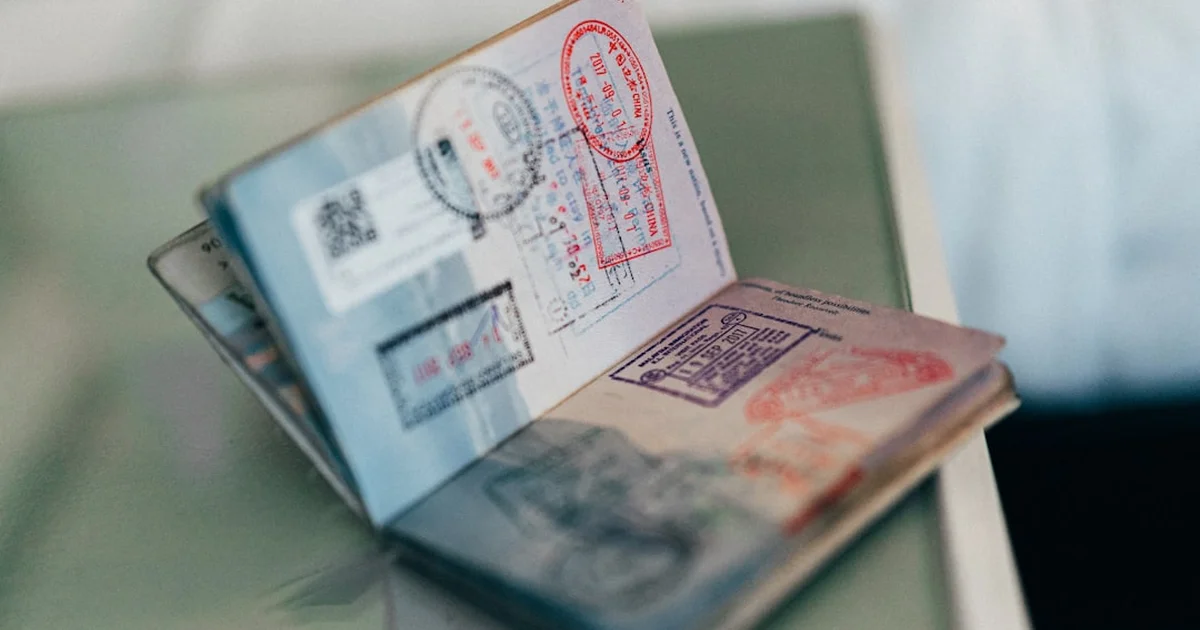
Photo by Kit (formerly ConvertKit) on Unsplash
What dual nationality with Spain actually means
Dual nationality means you're a citizen of two countries at the same time. You hold both passports, you can work in both, and you can vote in both. You don't give up where you come from.
Here's the key thing: whether you get to keep your previous nationality when you become Spanish depends on your country. And there are two different paths that a lot of people mix up — even a lot of websites get this wrong. Understanding them will save you headaches at the Civil Registry.
The two paths to not giving up your nationality
Group A — Countries with a bilateral dual nationality treaty
Spain has signed formal dual nationality treaties with a specific group of countries. If you're from one of them, the treaty itself covers you: you become Spanish without renouncing your original nationality.
- The twelve classic Latin American countries: Chile (the first one, 1958), Peru, Paraguay, Nicaragua, Bolivia, Ecuador, Guatemala, Costa Rica, Honduras, the Dominican Republic, Argentina, and Colombia. These treaties were signed between the late 1950s and the following decades.
- France (in effect since April 1, 2022): the first and only European Union country with a dual nationality treaty with Spain.
France is the big new development. If you're French, you can naturalize as Spanish without giving up your French passport. But heads up: the treaty doesn't shorten the residency time you need to apply for citizenship.
Group B — Countries without a treaty that still don't require you to renounce
Here's the nuance almost nobody explains well. Other countries don't have a bilateral treaty signed with Spain, and yet their nationals still don't need to renounce their nationality when becoming Spanish. Why? Because the Spanish Civil Code (Article 24) explicitly exempts Latin Americans and a handful of other countries from that renunciation, treaty or no treaty.
- Latin American countries without a treaty: Cuba, Mexico, Uruguay, Venezuela, Brazil, El Salvador, Panama, and Puerto Rico.
- Other countries exempt under the Civil Code: Andorra, the Philippines, Equatorial Guinea, and Portugal.
The practical effect is the same for both groups: you keep your original nationality. If you're Cuban or Mexican and you go looking for "Cuba-Spain dual nationality treaty" or "Mexico-Spain treaty," you won't find one — it doesn't exist — but it doesn't matter: you don't have to renounce anything, because Article 24 of the Civil Code covers you. The legal basis is different; the result is identical.
If your country isn't in either group
If you're from Morocco, China, the United States, Pakistan, India, or any other country outside the two groups above, the law requires you to formally renounce your original nationality when you swear allegiance to Spain. That renunciation is done on paper, in front of the Civil Registry. In practice, some countries don't recognize that renunciation and you might end up keeping both passports de facto — but as far as Spain is concerned, you'll have renounced it.
What about Romania? This is the question of the moment: more than 600,000 Romanians live in Spain. Spain and Romania have been negotiating a dual nationality treaty since 2023, but as of right now it's not in effect — it hasn't been published in the BOE (Spain's official gazette). Until it's signed and takes effect, a Romanian who becomes a Spanish citizen has to formally renounce Romanian nationality. We'll update this guide as soon as there's a treaty.
The most expensive mistake people make
Here's something a lot of people don't know, and it costs them time — sometimes more than a year of delay:
A single day in an irregular immigration status can reset your years-counter back to zero. The residency you need to apply for citizenship has to be legal, continuous, and immediately prior to your application. If your permit expired for a month and you didn't renew it in time, that period might not count.
The most common trap is thinking that time spent on a student visa counts. It doesn't. Years of residency under a student visa don't count toward citizenship.
Another frequent mistake: submitting your criminal record certificate from your home country expired or without an apostille. The document has to be legalized in your country of origin, and if it's not in Spanish, it needs to be translated by an official translator.
How many years you need to live in Spain: the exact timelines
Not everyone needs the same amount of time. Here are the actual timelines depending on your situation:
| Timeline | Who does it apply to? |
|---|---|
| 1 year | Married to a Spanish citizen (at least 1 year of marriage), born in Spain, widow/widower of a Spanish citizen, under Spanish legal guardianship for 2 years |
| 2 years | Nationals of Latin American countries, Portugal, Andorra, the Philippines, Equatorial Guinea, and people of Sephardic origin |
| 5 years | People with recognized refugee status in Spain |
| 10 years | General case (all other nationalities) |
Watch out for this: The 2 years under the Latin American agreement are counted from when you get legal residency, not from when you arrived in Spain. If you arrived without status and later regularized your situation, the clock starts from the date of your first residence card.
Requirements to apply for Spanish citizenship
Meeting the residency requirement is just the first step. You also need to show integration and good civic conduct. Specifically, here's what they're going to ask you for:
- Full, valid passport (every page, including blank ones)
- Birth certificate from your country, apostilled and translated if it's not in Spanish
- Criminal record certificate from your country of origin, apostilled (for anyone over 18)
- Spanish criminal record certificate
- Updated certificate of municipal registration (empadronamiento)
- Copy of your valid Foreigner Identity Card (TIE)
- Passed CCSE certificate (test of constitutional knowledge)
- DELE A2 certificate or higher (language test), unless you're from a Spanish-speaking country
- Proof of fee payment: €104.05 (form 790, code 026)
The Instituto Cervantes exams: The CCSE exam costs €85 and is offered every month except August and December. The DELE A2 has an additional cost. If you're from Argentina, Bolivia, Chile, Colombia, Cuba, Ecuador, Mexico, Venezuela, or any other Spanish-speaking country, you're exempt from the DELE. But not from the CCSE — everyone has to take that one.
You can register at examenes.cervantes.es
The step-by-step process
Step 1 — Pass the exams first. The CCSE certificate is valid for 4 years. Get it before you gather the rest of your paperwork, since everything else expires faster.
Step 2 — Gather your documents and get them apostilled. Documents from your country need to be apostilled at the source. Request the apostille with plenty of lead time — in some countries it takes weeks or months.
Step 3 — Submit your application online. The process is 100% online through the Ministry of Justice's electronic headquarters (sede electrónica). You'll need a digital certificate or Cl@ve PIN. Save the case number you'll receive.
Step 4 — Track it on "Cómo va lo mío." The official portal for checking your case status is mjusticia.gob.es. The Ministry has a maximum of 1 year to resolve your case. If that year passes with no response, it's technically considered denied by administrative silence, though you can file an appeal to force a resolution.
Step 5 — Take the oath of citizenship. If you're granted citizenship, you have exactly 180 days to complete the oath or pledge before the Civil Registry or a Notary. If you don't do it within that window, the grant expires and you have to start over.
Step 6 — Register and get your ID card. After the oath, your birth is recorded in the Spanish Civil Registry. With that certification, you can go to the police to apply for your Spanish ID card and passport.
If you have Galician roots, this is especially relevant to you
If you're from Cuba, Venezuela, Argentina, or Brazil and have Galician ancestry, there's specific support available that a lot of people don't know about.
The Xunta de Galicia (Galicia's regional government) opens applications every year for extraordinary aid to returning Galician emigrants. In 2026, the program is open with an initial budget of €2.3 million aimed at supporting around 1,000 families. Cuba, Venezuela, and Argentina have historically been the main countries of origin for beneficiaries.
There's also the Retorna Cualifica Emprego program, which opens applications on May 12, 2026, and connects Galicians abroad with Galician companies looking for specific profiles. It covers everything from the move itself to your first year there.
Are you Cuban with Galician roots? More than 44,000 Galicians and their descendants with Spanish nationality live in Cuba. If you already have Spanish nationality by descent and want to move back to Galicia, you can access this support. Check the Xunta's electronic headquarters at sede.xunta.gal or reach out to the Federación de Sociedades Gallegas in Havana.
What nobody tells you: double taxation
Having two passports doesn't mean paying taxes in two countries at once. Spain has double taxation treaties with most Latin American countries. If you live in Spain more than 183 days a year, you pay tax here on your worldwide income.
But if you have assets in your home country worth more than €50,000, you'll need to file Form 720 (declaration of assets abroad). Not many people know about this, and the penalties for not filing are very steep.
Your next step
Something concrete to do tomorrow: Go to examenes.cervantes.es and book a spot for the next available CCSE exam in your city. The exam costs €85 and there are sittings almost every month. It's the one requirement you have complete control over and that has a fixed date — get it done as soon as possible. In the meantime, go ahead and request the criminal record certificate from your home country with the corresponding apostille, since that's the document that takes the longest to arrive.