
Spanish nationality by residence 2026: guide for Colombia, Venezuela, Argentina
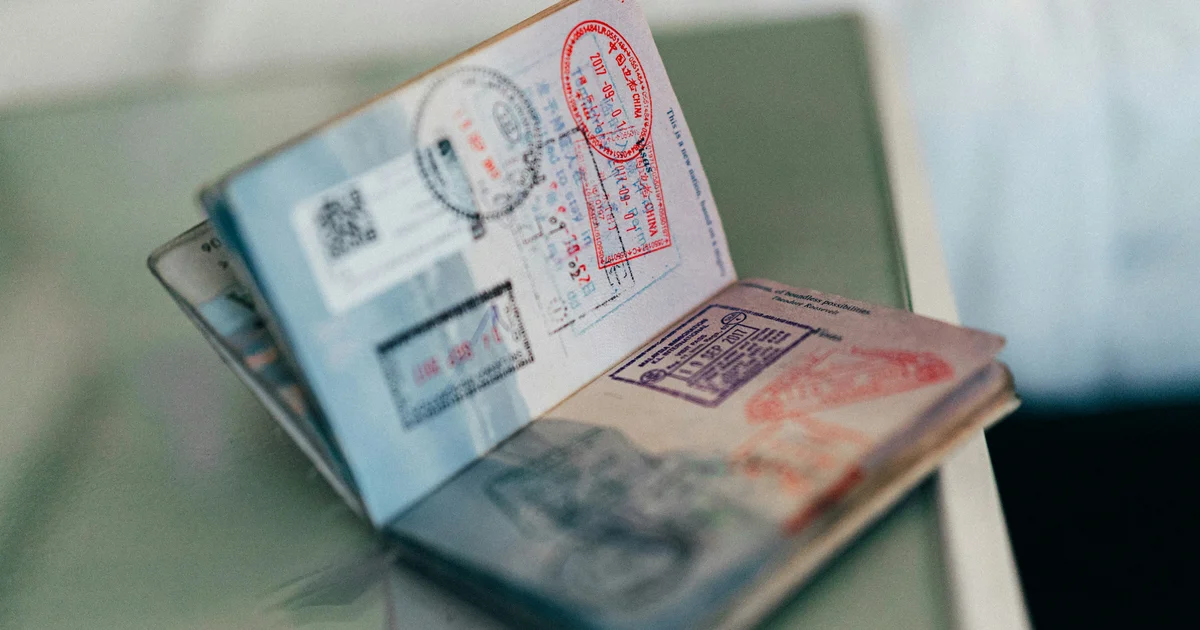
Photo by Kit (formerly ConvertKit) on Unsplash
If you're Colombian, Venezuelan, or Argentinian and you've had 2 years of legal, continuous residency in Spain, you can already apply for citizenship. You don't need to wait the 10 years the law requires for most countries in the world.
That shorter timeframe exists because Article 22 of the Civil Code recognizes a historical link with Ibero-American countries, Andorra, the Philippines, Equatorial Guinea, Portugal, and people of Sephardic origin. If your nationality of origin is in that group, your path is shorter than almost any other foreigner's in Spain.
Your timeframe depending on your situation:
- 2 years — nationals of origin from Ibero-American countries (Colombia, Venezuela, Argentina, and the rest), Andorra, the Philippines, Equatorial Guinea, Portugal, and people of Sephardic origin.
- 1 year — if you're married to a Spanish citizen, if you were born in Spain, or if you're descended from a Spanish national by origin — among other cases listed in art. 22.2 of the Spanish Civil Code, which also covers widowhood and legal guardianship by a Spanish citizen.
- 5 years — if you have recognized refugee status.
- 10 years — all other nationalities, with no historical or family link to Spain.
The most expensive mistake: time away from Spain that breaks your residency
This is what fewest people know and what costs the most money: you can hit the 2-year mark on the calendar and still get denied citizenship because your trips out of Spain broke the continuity.
The criteria applied by the Administration (the Directorate General for Legal Certainty and Public Trust) is clear: if you're applying under the 2, 1, or 5-year timeframe, no single trip out of Spain can exceed 3 consecutive months. For the 10-year timeframe, the limit goes up to 6 consecutive months.
The most common trap: traveling to Colombia, Venezuela, or Argentina for a family emergency and staying there for more than 3 months straight. The law only requires your residence to be legal, continuous and immediately prior to the application (art. 22.3 of the Civil Code): it sets no number of months. What breaks that continuity is set by administrative and judicial criteria, and in practice absences longer than three consecutive months — or significant cumulative ones over the period — are examined case by case and may be treated as a break. If you have been away for longer than that, prepare your justification instead of writing it off.
Before any long trip, count the days you've been away on that same trip. If you're getting close to 3 months, come back before you hit it.
Documents you need to gather
The process is done online, through the Ministry of Justice's electronic office, using a digital certificate. You'll need:
- Apostilled and translated birth certificate.
- Criminal record certificate from your home country, apostilled and recently issued (usually required to be from the last 3 months).
- Spanish criminal record certificate, which the Ministry itself requests automatically.
- Certificate of registration (empadronamiento) proving your full years of residency.
- Proof of payment of fee 790-026: the current amount of form 790-026, which is worth checking when you generate the form, according to the Ministry of Justice's electronic office.
- CCSE certificate. You do not need the DELE A2 if you are a national of Colombia, Venezuela, Argentina or any of the Spanish-speaking countries listed in art. 6.5 of Royal Decree 1004/2015, nor if you already hold a DELE at A2 or above.
Once you open the online application, you have 2 months to sign and submit it. If you miss that deadline, the Ministry deletes it and you have to start from scratch.
The exam you do need and the one you probably don't
Here's something not everyone tells you clearly: if you're Colombian, Venezuelan, or Argentinian by birth, you're exempt from the DELE A2 exam. The Instituto Cervantes waives that test for nationals of origin from Spanish-speaking countries, since Spanish is already your language.
But that doesn't get you out of everything. You do have to pass the CCSE (Test of Constitutional and Sociocultural Knowledge of Spain), which is mandatory as a general rule: art. 6 of Royal Decree 1004/2015 requires passing the CCSE and the DELE A2 without setting any age limit. If you are over 70 the exemption does exist, but it has to be applied for and granted — it does not apply automatically just because of your age. It's 25 multiple-choice questions about the Constitution, institutions, and Spanish culture, and it costs €85 according to the Instituto Cervantes. The certificate is valid for 4 years from the date you pass it, so don't take it too early if you still have years of residency ahead of you.
You can only register for the exams on the official website, examenes.cervantes.es. Be wary of any agency that "guarantees" you'll pass — it's an official exam and nobody can buy it for you.
How long it really takes
Order JUS/1625/2016 gives the Ministry of Justice 1 year from when your file is complete to issue a decision. In practice, real timeframes tend to run 12 to 24 months, and some cases stretch out to 3 years depending on the Ministry's workload that year.
You can check the status of your file on the Ministry of Justice's electronic office with your digital certificate. Checking it every few months won't speed anything up, but it will let you know early if any document is missing.
Why citizenship gets denied (and how to avoid it)
The most common reasons for denial aren't a mystery:
- Criminal or police records, even years after they've been cleared: the Administration sometimes still weighs them against your "good civic conduct."
- Absences from the country of more than 3 consecutive months (the mistake covered above).
- Outstanding debts with the Tax Agency or Social Security.
- Expired documents in your file: criminal record certificates older than 3 months or apostilles processed incorrectly.
If your citizenship application is denied, the appeal window is short and can't be extended. Keep a copy of all your documentation from day one — you'll need it if you have to appeal.
What if you have Spanish grandparents?
This guide covers citizenship by residency. If your father, mother, or grandparent was born Spanish, your path is different: citizenship by option or origin, tied to the Democratic Memory Law, which doesn't require the 2 years of prior residency.
If you already obtained it that way and vote from abroad, read what Spain's Supreme Court has suspended about CERA voting for people naturalized under the grandchildren's law.
This is especially relevant if you have Galician roots: the Xunta de Galicia keeps specific aid programs for people of Galician origin abroad, and there's a significant group of Cubans with Galician grandparents who choose this route instead of residency. If that's your case, don't follow the timeframes in this article — check the citizenship-by-option process first, before counting your years of residency.
Your next step
Count backward from today: have you already got 2 years of legal, continuous residency, with no single trip out of Spain longer than 3 months straight? If the answer's yes, go to examenes.cervantes.es right now and book your spot for the CCSE. It's the step that takes the longest to organize, and the one most people leave for last.