
Spain Immigration Paperwork for Minors: Guide 2026
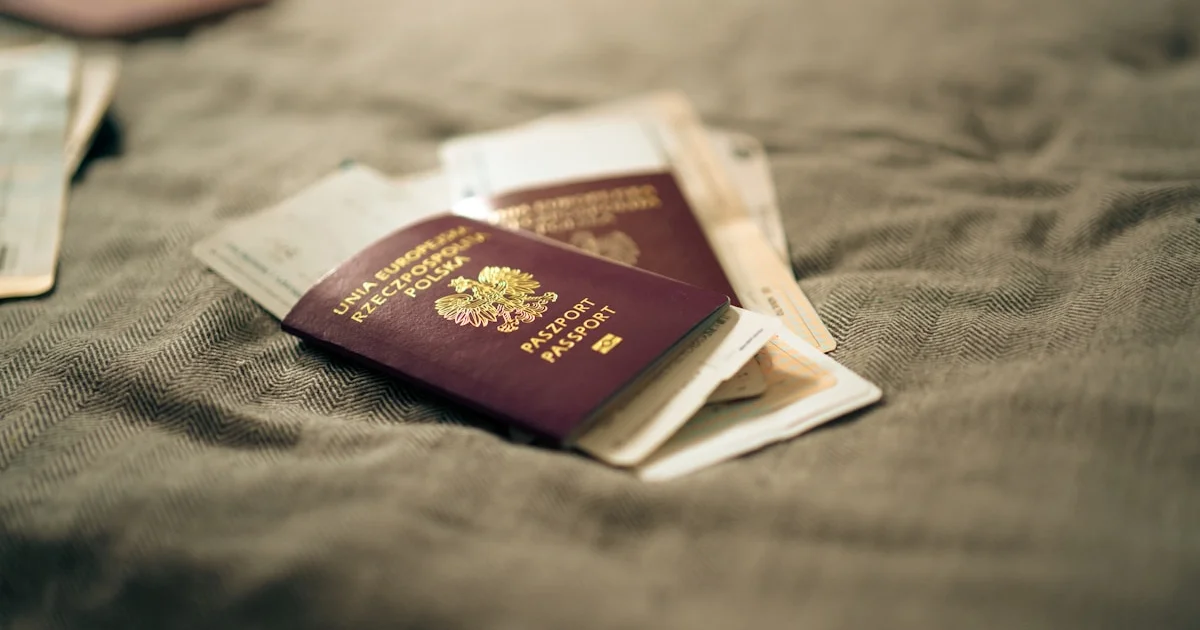
Photo by Jakub Żerdzicki on Unsplash
The problem thousands of parents run into on the immigration e-office site
You're about to file your minor child's residency paperwork. You log into the sede electrónica de extranjería (Spain's immigration e-office), start filling out the form, and it asks for the date of birth. You enter the child's, and the system rejects it: "The applicant must be over 18 years old."
This isn't a glitch. It's a misunderstanding that trips up thousands of families every year. The form isn't designed for the minor to access it directly. You're the one filing the case, as their legal representative. And the system needs you to do it in a very specific way.
The fix: acting "on behalf of" your child
Here's the correct procedure:
- Log in with your digital certificate (or Cl@ve Permanente) to the immigration e-office.
- On the form, look for the option "Actuar en representación de" ("Act on behalf of") or "Representante" ("Representative").
- Fill out two separate data blocks:
- APPLICANT (INTERESADO): your minor child's details (name, passport, NIE if they have one, date of birth).
- REPRESENTATIVE (REPRESENTANTE): your own details as the parent (name, DNI/NIE, digital certificate).
- Attach documentation proving your legal representation (family record book, apostilled birth certificate, custody ruling).
The most common procedures for minors
1. Residency for a foreign minor
There are two different scenarios here, because the form itself changes depending on the case:
- Bringing over a minor child (a parent with legal residency who's bringing their kids to join them): this is handled through family reunification using form EX-02.
- A residency authorization in the minor's own name (a foreign minor who needs their own residency card, not tied to a reunification process): this is handled with form EX-25 ("temporary residence authorization and temporary relocation of foreign minors").
In both cases the fee is modelo 790, code 052 (residency authorizations), and in practice:
- The parent with legal residency files the application.
- It's signed with the parent's digital certificate.
- You'll need to show sufficient financial means to support the minor and suitable housing.
- If both parents share parental authority, consent from both may be required (or a court ruling granting sole custody).
2. Spanish nationality by residency
There's an important distinction here based on the minor's age:
- Under 14: the application is filed exclusively by the legal representative. The minor doesn't sign anything.
- Ages 14 to 17: the minor signs the application together with their parents or guardians. A minor aged 14 or older has the legal capacity to apply for nationality with the assistance of their legal representatives (Article 21.3.b of the Civil Code), and the application is filed online. The in-person appearance before the Civil Registry official comes afterward: once nationality is granted, the minor must swear or promise allegiance to the King and obedience to the Constitution, assisted by their representatives, within 180 days of notification (Article 23 of the Civil Code).
The required residency period to apply for nationality varies: 1 year if the minor was born in Spain, 2 years for nationals of Ibero-American countries, and 10 years as the general rule. The application is now processed online through the Ministry of Justice.
3. Renewing the TIE (Foreign National ID Card)
A minor's TIE expires just like an adult's. To renew it:
- The parent files the application using their own digital certificate.
- They indicate they're acting on behalf of the minor.
- You need to pay the applicable fee (modelo 790, code 012) and book an appointment for fingerprinting if the minor is 6 or older.
Documents you'll need for almost every procedure
Although each procedure has its own quirks, here's the baseline documentation you'll be asked for in practically every immigration case involving a minor:
- The minor's valid passport (original and full copy).
- The minor's NIE or TIE, if they already have one.
- The parent's DNI or NIE — whoever is acting as the representative.
- The representative's digital certificate (FNMT or Cl@ve Permanente). Minors under 14 can't get their own digital certificate.
- The minor's birth certificate, apostilled and translated if applicable.
- Family record book (libro de familia) or equivalent document proving parentage.
- Proof of municipal registration (padrón) for the minor (they need to be registered at the same address as the representative, or at the address where they'll be living).
- Proof of fee payment (modelo 790, code depends on the procedure).
The 5 most common mistakes (and how to avoid them)
- Entering the minor's date of birth in the applicant field. As we explained, you're the applicant. Your date of birth goes in the representative/applicant field.
- Not checking the representation box. If you skip it, the system assumes you're filing something for yourself. Your case will be misassigned and you'll have to start over.
- Not attaching the custody or parentage document. Without a family record book, birth certificate, or court ruling, the authorities can't verify that you have the right to represent the minor.
- Trying to use the minor's own digital certificate. Kids under 14 can't get an FNMT digital certificate. If your child is between 14 and 17, they can get one, but for most immigration procedures it's still the representative who signs.
- Submitting foreign documents without an apostille or sworn translation. A birth certificate issued in another country needs a Hague Apostille (or consular legalization) and a sworn translation into Spanish. Without these, the document isn't valid.
How a minor's NIE/TIE is handled
Foreign minors legally residing in Spain are entitled to their own NIE (Foreigner ID Number) and, when applicable, a TIE (Foreign National ID Card) that serves as physical proof. This is handled by the parent or legal representative:
- Initial application: this is filed together with the parent's, usually as part of the same family residency or reunification process. If the family is already in Spain with separate authorizations and a minor arrives later, it's handled through family reunification.
- Fingerprinting: from age 6 onward, fingerprinting is mandatory to issue the TIE. Below that age, the TIE can be issued without fingerprints.
- Renewal: a minor's TIE is renewed either when the parent's is renewed or when the minor reaches certain key ages (14, in some cases). The renewal schedule depends on the type of authorization the minor holds.
The parent or legal guardian must go in person with the minor to the appointment at the police station or immigration office. In other words, a representative acting through the e-office isn't enough on its own — the minor's physical presence is required to get the physical TIE.
Differences depending on the minor's age
Although legally all minors are represented by their parents, there are important practical nuances depending on the age range:
Children ages 0 to 5
No fingerprinting required. The TIE is issued directly with the child's photo and details. The appointment and procedure are relatively quick. The key document is the full, apostilled, and translated birth certificate if the child was born abroad.
Children ages 6 to 13
Fingerprinting is mandatory. You'll need their own passport (if issued by their home country) and, if the child lives with only one parent, authorization from the other parent or a court ruling proving custody. This is usually where things get complicated: if the parents are separated, the other parent needs to sign a specific notarized authorization to process the NIE/TIE in Spain, especially if the minor will be traveling outside the country.
Teens ages 14 to 17
Fingerprinting is mandatory, and from age 14 onward, the minor must personally sign the application form. The parent's signature is still required as legal representative for as long as the child remains a minor. Some procedures (like registering with Social Security as an employee under a work authorization) require additional documentation depending on age.
Registering a minor on the padrón
Municipal registration (empadronamiento) is a right independent of immigration status: any minor living in a Spanish municipality has the right to be registered on the padrón, regardless of the parents' administrative situation. This is governed by the Ley de Bases del Régimen Local and its subsequent regulations.
- If the minor arrives in Spain with their parents, registration happens together with the rest of the family. The parent goes to the town hall with their own ID, the minor's birth certificate (apostilled and translated if issued abroad), and the lease or the property owner's authorization.
- If the minor arrives later and is left in the care of a relative (grandparents, aunts/uncles), that relative has to prove guardianship through parental authorization or a court ruling.
- Registration on the padrón does NOT require an NIE or residency authorization beforehand. The padrón is a population census, not an immigration registry.
Important: registering a minor on the padrón is a requirement for enrolling them in school. If your child is about to start school in Spain, this should be your priority.
When one parent lives outside Spain
This is a common situation: the minor lives in Spain with one parent, while the other remains in the home country. Spanish regulations are strict about legal representation when only one parent is present:
- Notarized authorization from the absent parent: for any immigration procedure involving the minor (NIE, TIE renewal, leaving Spain), the parent who isn't present must sign an authorization before a notary. This authorization can be issued in the country where that parent lives and then brought to Spain, apostilled and translated.
- Court ruling granting sole custody: if the parents are separated or divorced and the parent in Spain has sole custody by court order, that ruling replaces the notarized authorization. Always bring the original or a certified copy.
- Deceased parent: an apostilled and translated death certificate. The surviving parent becomes the sole legal representative.
In every case, foreign documents must carry an apostille under the Hague Convention and be translated by a certified sworn translator if they're in a language other than Spanish or a co-official language.
Frequently asked questions
Does my child need an NIE if they're only going to study in Spain for one school year?
Yes. Student residency for minors requires their own NIE/TIE. The authorization itself is a study authorization tied to the school, but the ID document is still theirs.
Can my child travel to Spain with just a passport if I already have residency?
They need a visa or entry authorization (depending on nationality and reason for travel). If they're entering as a tourist for under 90 days, they don't need an NIE; if they're staying, they do.
Do my children's TIEs renew automatically when I renew mine?
No, not automatically — you need to file a separate renewal application for each child. That said, the validity period should match the main cardholder's.
What happens if my child turns 18 while the process is underway?
If the application was filed while they were still a minor, it follows the minor's process for that specific application. For the next renewal or procedure, they're considered an adult and must sign and appear in person.
Can I submit everything through the e-office with my digital certificate?
Yes, acting on behalf of your child. The forms include an "act on behalf of" option to add the minor as the applicant. Fingerprinting and physical TIE pickup do require an in-person appointment at the police station, though.
Can a minor get a health card without their immigration paperwork in order?
Yes. Healthcare for foreign minors is guaranteed by law regardless of immigration status. Go to your local health center with the birth certificate and padrón registration.
Which of my child's documents expire and need renewing?
Passport (usually valid 5 or 10 years depending on the issuing country), TIE (tied to the authorization), and padrón certificate if you're asked for an updated one for a procedure (typically valid for 3 months).
Are there reduced fees for minors?
Some fees have reduced amounts for minors. Check the modelo 790 that applies to your procedure (790-052 for regularization, 790-012 for standard residency) on the Spanish National Police e-office.
Official sources and applicable regulations
All the information in this guide is based on regulations in effect as of 2026:
- Immigration e-office: sede.administracionespublicas.gob.es
- Organic Law 4/2000 (LOEX), Articles 16 to 19 (family reunification) and Article 31 (temporary residency).
- Royal Decree 1155/2024, which amends the Immigration Regulations and updates online procedures.
- Ministry of Justice — nationality-by-residency procedures: mjusticia.gob.es
- Civil Code, Articles 154 to 171 (parental authority and legal representation of minors).
Wrapping up
Immigration procedures for minors carry an extra layer of complexity due to legal representation and the additional documentation needed when one parent isn't present. But the general principle is simple: a minor has the same administrative rights as an adult — they just act through whoever holds their legal representation.
The most important thing is to prepare your documentation ahead of time: apostilled and translated birth certificate, notarized authorization from the other parent if applicable, an up-to-date padrón registration, and a valid passport. Once you have all that, the steps are the same as for an adult, just adjusted for representation.
More related resources:
- Family reunification visa
- 2026 regularization — general guide (includes family units with minors)
- What documents you need depending on your case
- Family visa for relatives of Spanish citizens
- Family visa for relatives of EU citizens
Last updated: May 6, 2026. Immigration rules change frequently: for important procedures, always check the Ministry of Inclusion website or consult a specialized professional.