
How to submit the 2026 regularisation in person — a practical guide from the first day
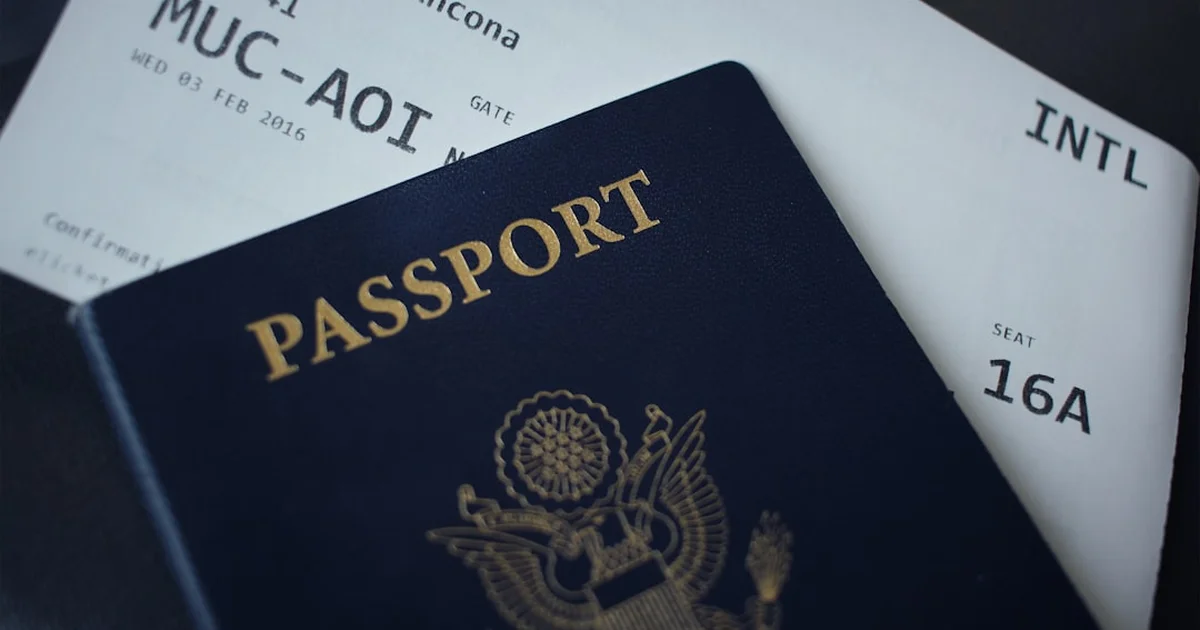
The 2026 extraordinary regularization deadline was 30 June 2026. If you did not manage to apply, it is not the end of the road: check the alternative routes such as arraigo social and the different visa options to regularize your status in Spain.
⚠️ The application window for the extraordinary regularization closed on 30 June 2026 and no new applications are accepted (Royal Decree 316/2026, no extension). We keep this guide as a reference of the process.
Already filed your application? What happens now and the next steps →
Didn't make it in time? Arraigo social guide, the ordinary route →
The window to apply for Spain's extraordinary regularisation is now open through 4 channels: Correos (the Spanish postal service), Oficinas de Extranjería (Immigration Offices), Seguridad Social (Social Security) offices, and the online route. In-person service began on Monday 20 April 2026, and day one produced two opposite scenarios: queues of up to 15 hours and a 100 EUR black market for appointments in Barcelona, versus empty offices in the Canary Islands. This guide, written on day two of the window, explains what you have to do, through which channel, with which documents, and how to avoid the most common mistakes. If you want to check first whether you qualify, our eligibility questionnaire tells you in two minutes.
Key facts about the process
In-person start: Monday 20 April 2026 Deadline: Tuesday 30 June 2026 (both routes) Legal basis: Real Decreto 316/2026, published in the BOE (Spain's Official State Gazette) on 15 April 2026 Official forms: EX-32 (irregular status) or EX-31 (with a previous international protection application) Fee: 38.28 EUR (Modelo 790, código 052) Channels: 3 in-person (Correos, Immigration, Social Security) + 1 online (24/7 with Cl@ve digital ID) Administrative silence: NEGATIVE. If there is no reply within 3 months, the application is deemed denied. Authorisation granted: residence + work for 1 year initially (5 years for minors).
Eligibility — who can apply
There are three core conditions common to every applicant, plus a fourth requirement that works as three alternative routes. Only one of the three alternative routes is required.
Core conditions (mandatory):
- Arrival in Spain before 1 January 2026, either as a person in irregular status or with an international protection application filed before that date.
- At least 5 months of uninterrupted stay up to the time of the application. Short trips do not break the count; long absences do.
- No criminal record in Spain, in your country of origin, or in any country where you lived during the last 5 years. No threat to public order, public security, or public health.
Alternative routes (one is enough):
- Employment route: a signed employment contract, a binding job offer, or at least 90 days worked in the last year (even without a formal contract previously).
- Family route: living with dependent minor children, dependent ascendants, or a spouse/registered partner who is Spanish or a legal resident.
- Vulnerability route: a certificado de vulnerabilidad (vulnerability certificate) issued by municipal social services or by a Third Sector entity registered in the RECEX (Registro Electrónico de Colaboradores de Extranjería — Electronic Register of Foreigners Collaborators), following the official template of the Ministry of Inclusion. This route was introduced by the Twenty-First Additional Provision of the Foreigners Regulation via RD 316/2026.
If you do not meet the most critical core condition — arriving before 1 January 2026 — your route is not this regularisation but the arraigo social (rooted residence), which requires two years of stay.
Ministry's official simulator: the Ministry of Inclusion itself publishes an official requirements simulator accessible from its portal. Ours and the official one are both orientative questionnaires and complementary; neither guarantees the final administrative decision.
The 4 submission channels
The Ministry has enabled four channels. Choosing the right one is the most important decision of this process: waiting times, queues, and the ease of getting an appointment vary hugely between channels.
1. Correos post offices — 373 designated branches
Correos has designated its offices in all provincial capitals and municipalities with more than 50,000 inhabitants. Staff receive the documentation, scan it, forward it to the Ministry, and give the applicant a receipt. A specialist civil servant later makes the final decision.
- Opening hours: Monday to Friday, 08:30 to 17:30.
- Prior appointment: mandatory.
- Pros: long opening hours, broad territorial coverage, usually shorter queues outside Catalonia and Madrid.
- Con: Correos only receives and forwards; staff cannot resolve technical questions on the spot.
2. Oficinas de Extranjería (Immigration Offices at provincial Delegaciones and Subdelegaciones de Gobierno)
These are the technical immigration offices. Staff are trained specifically in foreigners' law and can orient you in complex cases.
- Opening hours: Monday to Friday, 16:00 to 19:00 (afternoon slot reserved for this process).
- Prior appointment: mandatory.
- Pros: expert officials, resolution of complex questions.
- Con: limited capacity and pre-existing saturation in major cities.
3. Designated Social Security offices
The Ministry has activated a network of Seguridad Social offices as the third in-person channel.
- Opening hours: Monday to Friday, 16:00 to 19:00.
- Prior appointment: mandatory.
- Pros: especially useful in Catalonia, where the Ministry has redirected part of the flow to ease the pressure on Immigration.
4. Online — 24/7 with a digital ID
The online route has been operational since 16 April and is the fastest option if you have the digital means.
- Access: official portal inclusion.gob.es/regularizacion, using Cl@ve (Spain's government digital identity system), a digital certificate, or an authorised representative (a lawyer, graduado social, gestor administrativo, or registered collaborating entity).
- Availability: 24 hours.
- Pros: no appointment, no travel.
- Con: requires Cl@ve or a digital certificate, which many people in irregular status do not have.
Quick comparison
| Channel | Hours | Appointment | Best for |
|---|---|---|---|
| Correos (373 offices) | Mon–Fri 08:30–17:30 | Yes | Standard profiles without technical doubts |
| Oficina de Extranjería | Mon–Fri 16:00–19:00 | Yes | Cases with legal nuances |
| Social Security | Mon–Fri 16:00–19:00 | Yes | Catalonia; overflow redirection |
| Online | 24/7 | No | People with Cl@ve or with a lawyer/agent |
Mandatory prior appointment — how to get one (for free)
The Ministry has been unambiguous: "no one will be seen without a prior appointment". Just as unambiguous on the price: "the prior appointment has no cost; no one can charge for booking it". Any offer to pay for a slot — such as the 100 EUR deals already circulating in Barcelona — is fraud, and an appointment obtained that way can be cancelled.
There are three official channels to request one:
- With digital ID (Cl@ve) on the portal inclusion.gob.es/regularizacion. This is the most complete option: it lets you choose the office, date, and time.
- Web form on the same portal, without digital ID. It does not allow you to choose the office or time slot; the system assigns the nearest available one.
- Phone 060, answered in Spanish Monday to Friday, 09:30 to 14:00 and 16:30 to 19:30. Free, public, and staffed by human operators.
Practical tips:
- If 060 is saturated, try in less busy slots or use the portal's online route.
- If the system cannot find a nearby appointment, try widening the geographic radius in the web form or accept a further location: many offices in municipalities of 50,000–100,000 inhabitants have slots while the capitals are saturated.
- If an agency or middleman offers you a "guaranteed" appointment for a fee, report it. First-day scams are already documented.
We will shortly publish detailed guides for [prior appointments at Correos] and [prior appointments at the Oficina de Extranjería], with step-by-step screenshots of the flow.
Family in a single appointment: the Ministry allows you to manage in a single appointment the applications of members of the same cohabitation unit (spouse or partner and first-degree ascendants/descendants who live with you). Those applications will also be decided at the same time. If your file is a family one, request the joint appointment from the start.
Required documents
Documentation is grouped into common documents (all applicants) and documents specific to the chosen route (employment, family, or vulnerability).
Common documents (mandatory)
- The EX-32 form (or EX-31 if you have a previous international protection application), signed. Both forms include annexes for the criminal record declaration and vulnerability certification within the same PDF.
- Valid passport or equivalent travel document, with a full copy of every page.
- Documents proving your presence in Spain before 1 January 2026 and 5 months of uninterrupted stay: historical empadronamiento (municipal registration), Spanish health card, NGO reports, rent receipts, utility bills, money transfer receipts, school enrolment records, medical reports, or any dated, nominative official document.
- Criminal record certificate: from Spain, from your country of origin (apostilled), and from any other country where you lived for more than 6 months during the last 5 years. Valid for a maximum of 3 months from the issue date.
- Fee payment: 38.28 EUR using Modelo 790, código 052. Keep the bank proof of payment. The fee covers the residence authorisation; the form and amount are the same as for arraigo.
Route-specific documents
- Employment route: signed employment contract, binding job offer, or proof of the 90 days worked in the last year (payslips, vida laboral — the Social Security employment history report, employer's compliance certificate with the Tax Agency and Social Security).
- Family route: libro de familia (Spanish family book); marriage certificate or registered civil partnership; cohabitation certificate or joint empadronamiento; DNI or NIE of the Spanish or legally resident relative you live with.
- Vulnerability route: the certificado de vulnerabilidad using the official Ministry template, with electronic signature and digital seal. It is issued only by the social services of the Ayuntamiento (town hall) where you are registered, or by a Third Sector entity registered in the RECEX (Orden ISM/164/2026). Caution: the vulnerability certificate is valid only for this process; it does not replace the informe de arraigo or other social reports.
We will soon publish a complete, downloadable checklist with the exact list of documents by profile.
City-specific notes
Madrid
The Immigration Offices in Madrid were already saturated before 20 April, with arraigo appointments 5–8 months out. Day one has been managed by redirecting pending empadronamiento cases to the Transport Consortium and redirecting standard regularisation cases to Correos. If you are in Madrid, prioritise Correos over Immigration if your case has no technical doubts, and consider the online route if you have Cl@ve. For Correos appointments, try the metropolitan ring (Alcorcón, Móstoles, Leganés, Getafe, Alcalá de Henares) if there are no slots in central Madrid.
Barcelona
Barcelona has been the epicentre of the collapse: queues of more than 15 hours on day one and a 100 EUR black market for appointments already detected on 21 April. The Ministry has redirected flow to the Correos network and the Social Security offices to ease pressure on Immigration. If you live in Barcelona, the recommendation is to avoid Immigration except for complex cases and to try Correos offices in the metropolitan area (L'Hospitalet, Badalona, Sabadell, Terrassa). Unions (CCOO) and registered advisory services are helping with the paperwork; go to them before queuing.
Valencia
Valencia absorbs the Mediterranean-corridor flow (Castellón, Alicante, and parts of Murcia). The traditional Immigration Office on Calle Marqués de Sotelo is the reference point; it is now supported by a network of Correos offices across the province with longer hours. If you live outside the capital, your best option is the nearest Correos office in provincial capitals or large municipalities of the Valencia Region.
Seville
Seville absorbs the flow from western Andalusia (Huelva, Cádiz, part of Córdoba). The Correos network in the province is extensive and allows you to distribute applications away from the centre. The Immigration Office on Plaza de España was already saturated before the process started, so the recommendation is the same as in Madrid: prioritise Correos in nearby municipalities (Dos Hermanas, Alcalá de Guadaíra, Tomares, Mairena del Aljarafe) if there is no slot in central Seville.
For other cities, use 060 or the office finder at citaprevia.correos.es.
Timelines
The maximum legal resolution time is 3 months from the date the application enters the administrative registry. If the Administration does not resolve within that period, NEGATIVE administrative silence applies: the application is deemed denied, and you can file an appeal (recurso de alzada).
Real-world times are unknown for this new process, but the experience of similar procedures (arraigo social, especially in Madrid and Barcelona) points to 5–8 months typically. The Government has announced staff reinforcements, but the expected volume is high and press estimates point to figures in the hundreds of thousands, so real-world times are likely to stretch.
Once granted, the initial authorisation is for 1 year, with the right to work in all sectors and across all of Spain (not the full Schengen Area, only Spain). For minors, the initial validity is 5 years. When the first year ends, holders must transition to an ordinary route (arraigo, cuenta ajena — employed residence, etc.) to renew.
When you can start working: the UTEX initiation notice
Before the final decision (the legal 3 months), there is an important intermediate step for applicants who need to start working early. When the UTEX (Unidad de Tramitación de Expedientes de Extranjería — Foreigners' File Processing Unit) admits your application for processing, it issues a procedure initiation notice. That document — different from the submission receipt — provisionally authorises you to reside and work anywhere in Spain and in any sector, as an employee or self-employed. RD 316/2026 does not set a fixed deadline for the UTEX to issue this notice: in practice it ranges from days to several weeks depending on the volume of applications.
Most common first-week mistakes
Based on information channels, Telegram groups, and specialised press between 20 and 21 April:
- Believing the prior appointment can be bought: fraud. The appointment is free, and both the Ministry and Correos have reiterated this.
- Filing EX-32 when EX-31 applies: international protection applicants must use EX-31 (Additional Provision 20). EX-32 is for people in irregular status (Additional Provision 21).
- Turning up without an appointment: no one is seen without one.
- Trying to use an old or generic vulnerability certificate: only a certificate issued with the official Ministry template is valid; informes de arraigo or standard social-services reports are not.
- Not checking the date on criminal record certificates: if they are more than 3 months old, the application goes into subsanación (correction request) and is delayed.
- Going to unregistered advisory services that charge for a "booking": the procedure itself is free; only professional services (lawyer, graduado social) legally charge for their work.
We will soon publish a dedicated article on frequent mistakes.
Frequently Asked Questions
Do I have to pay for the prior appointment? No. The prior appointment is completely free, whether you request it through Cl@ve, the web form, or the 060 phone line. If anyone asks you for money to book it, it is fraud.
Which form do I file if I am in irregular status and never applied for asylum? The EX-32, corresponding to Additional Provision 21 of the Foreigners Regulation.
I have a pending asylum application. Can I still apply? Yes, under Additional Provision 20. The form is the EX-31.
How long does the authorisation last if it is granted? 1 year initially for adults (with the right to work) and 5 years for minors. When it ends, you must transition to an ordinary route.
What if I have cancellable criminal records in Spain? Cancellable records do not prevent you from applying, but it is wise to request cancellation before the resolution. More detail in our guide on regularisation and criminal records.
Can I submit the application at the Town Hall (Ayuntamiento)? No. Town Halls are not an official channel for submission. They can only issue — through their social services — the vulnerability certificate. The application is submitted at Correos, the Oficina de Extranjería, the Social Security office, or online.
What if I am not empadronado (not registered at the Town Hall)? Empadronamiento is not mandatory, but it helps prove the 5 months of stay. If you are not empadronado, you will need other dated, nominative documents. Full guide at regularisation without empadronamiento.
Official sources
- BOE — Real Decreto 316/2026 (published 15 April 2026): the regulation that articulates the extraordinary regularisation. https://www.boe.es/eli/es/rd/2026/04/14/316
- Official portal of the Ministry of Inclusion, Social Security and Migrations — regularisation: official information, prior appointment form, FAQs. https://www.inclusion.gob.es/regularizacion
- La Moncloa — press release, 17 April 2026: the Government's official summary of deadlines and requirements. https://www.lamoncloa.gob.es/serviciosdeprensa/notasprensa/inclusion/paginas/2026/proceso-regularizacion-migratoria.aspx
- Correos — dedicated page on the process: operational detail on the 373 designated offices. https://www.correos.es/es/es/particulares/para-el-ciudadano/regularizacion-extraordinaria-personas-migrantes
- Civio — analysis of RD 316/2026 (15 April 2026): data journalism with the process keys. https://civio.es/el-boe-nuestro-de-cada-dia/2026/04/15/regularizacion-extraordinaria/
Conclusion
The window for the 2026 extraordinary regularisation will remain open until 30 June. Two months and ten days. The most important lever to avoid the collapse is choosing the right channel for your case, requesting the prior appointment as early as possible, and preparing the documentation with margin.
If you want a quick diagnosis of your situation, use the eligibility questionnaire. For the full context of the process, check the main guide to the 2026 extraordinary regularisation. And if you do not meet the requirements, arraigo social remains the two-year route.
This guide is informative and will be updated as new official data appears. For doubtful cases, always consult official sources (Ministry of Inclusion, Correos, the Oficina de Extranjería in your province) or a registered professional.