
How to get your university degree recognized in Spain: complete guide 2026
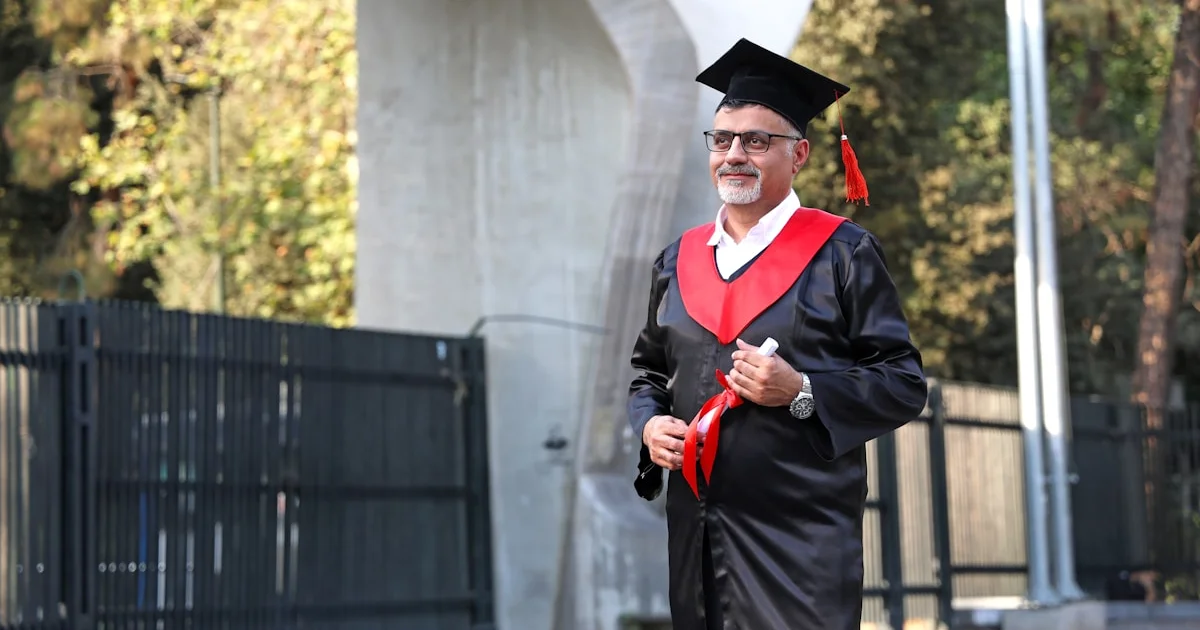
Photo by Babak Eshaghian on Unsplash
You arrived in Spain with your university degree in hand, years of hard work behind you, and a real drive to get to work. Then you find out that your degree isn't automatically valid here. What nobody tells you is that the process has specific pitfalls that cost a lot of people months — and money — when they get it wrong from the start. There is a solution. It's called homologation or equivalence declaration, and here's everything you need to know so you don't make mistakes.
What is homologation and what is it good for?
Homologation is the official stamp from the Ministry of Science, Innovation and Universities that says: "this degree is worth the same here." Without it, you can't practice regulated professions like Medicine, Nursing, Technical Architecture, or Engineering.
You need this recognition so that your foreign education is considered equivalent to a specific Spanish university degree. Without it, many doors stay closed even if you have years of experience.
Watch out for this: the most expensive mistake you can make before you start
Homologation, equivalence, or partial credit transfer: which one do you need?
They're not the same thing. Choosing the wrong one can cost you months. Here's the key difference:
| Procedure | What is it for? | Where do you apply? |
|---|---|---|
| Homologation | Practicing a regulated profession in Spain (Medicine, Nursing, Engineering, Teaching…). It equates your degree to a specific Spanish one. | Ministry (electronic office) |
| Equivalence declaration | Academic recognition of your degree level (Bachelor's or Master's). It's useful for accessing postgraduate programs, official master's degrees, or non-regulated job positions. It does not qualify you for regulated professions. | Ministry (electronic office) |
| Partial credit transfer | Getting individual subjects recognised so you can continue your studies at a Spanish university. It does not recognise the full degree. | The Spanish university of your choice |
The rule is simple: if your profession appears in the Annex of Royal Decree 889/2022 as a regulated profession, you need homologation. If it doesn't appear there (Marketing, Journalism, Business Administration, Design…), the equivalence declaration will be enough for you.
Documents you need to get ready
This is the part where most people slip up. Gather all of these documents before you even touch the form. All originals must be legalised and apostilled in your home country, except if you're coming from the European Union, the European Economic Area, or Switzerland.
- 📄 Original university degree, legalised and apostilled.
- 📋 Official academic transcript with all subjects taken, grades, and course hours, legalised and apostilled.
- 📚 Full study plan with detailed course hours, legalised and apostilled.
- 🪪 Valid identity document (passport, national ID card, or NIE).
- 💳 Proof of fee payment (form 790-107).
- 🌐 Sworn translation into Spanish of all documents that are not in Spanish.
If you come from a country that has a bilateral agreement with Spain, the process may be a little smoother. Spain has agreements with Germany, Italy, France, China, Argentina, Chile, and Colombia. This doesn't mean automatic recognition — the procedure is still mandatory.
Step by step: how to submit your application
The entire process is online. You can't submit it on paper or in person. Follow these steps in order:
- Step 1 – Check which procedure you need: Look up the Annex of RD 889/2022 on the Valida-TE portal to find out whether your degree corresponds to a regulated profession. Do this before anything else.
- Step 2 – Gather and legalise your documents: Request a detailed academic transcript from your home university. The more detailed it is — subjects, hours, credits, description of content — the better ANECA will be able to evaluate your file.
- Step 3 – Pay the fee: The amount is €166.50 (fee 107, form 790). You can pay online, using form 790-107 at collaborating institutions, or by bank transfer if you're abroad: IBAN ES16 9000 0001 2002 5310 8022, Banco de España.
- Step 4 – Submit your application online: Go to universidades.sede.gob.es and complete the homologation or equivalence form. Attach all your scanned documents following the official instructions.
- Step 5 – Track your application: Check the status of your file regularly from the same electronic office. If they ask you to provide additional documents and you don't respond within the deadline, your file can be archived.
How long does it take? The real timelines nobody tells you about
The maximum official deadline according to Royal Decree 889/2022 is 6 months. What nobody tells you is that in practice you'll be waiting between 12 and 24 months, depending on the type of degree, the Ministry's current workload, and whether your documentation was complete from day one.
The process has two phases: first ANECA issues its technical report (which can take up to 3 months), and then the Ministry issues its resolution. The resolution can be:
- ✅ Favourable: Your degree is homologated and you receive an official credential.
- ⏳ Conditionally favourable: You must complete supplementary training requirements — specific subjects or tests — before it becomes definitive.
- ❌ Unfavourable: Your submitted education is not considered equivalent. You can submit objections or an administrative review appeal.
How much is this going to cost you in total?
The official fee is €166.50, but that's not the only expense you need to account for. Here's what a lot of people don't calculate and then get surprised by:
| Item | Approximate cost |
|---|---|
| Official fee (form 790-107) | €166.50 (fixed, Ministry) |
| Apostille of documents (in home country) | Variable (depends on the country) |
| Sworn translation into Spanish | €50 – €200 per document (depending on length) |
| Specialist managers or lawyers (optional) | €200 – €800 (depending on complexity) |
Once paid, the fee is non-refundable, except in cases of recognised erroneous payment. Make sure your documentation is complete and correct before you submit it. Paying twice because of an avoidable mistake is the worst-case scenario.
The most expensive mistake: the full list of errors you need to avoid
The most common trap isn't just one single thing. It's a chain of mistakes that pile up. Steer clear of these:
- ❌ Submitting incomplete or illegible documents: An academic transcript without detailed subjects, without hours, or without an official signature can hold up your file for months.
- ❌ Confusing an apostille with a sworn translation: The apostille validates the document in your home country. The sworn translation converts it into Spanish by an officially recognised translator in Spain. You need both.
- ❌ Choosing the wrong procedure: Applying for equivalence when you need homologation means starting from scratch and paying again.
- ❌ Not checking whether your profession is regulated: Always check the Annex of RD 889/2022 before starting any procedure.
- ❌ Submitting a study plan without content descriptions: ANECA reviews subjects, ECTS credits, and hours in detail. The more complete your academic file is, the easier the evaluation will be.
- ❌ Not tracking your file: It's your responsibility to check the status regularly on the electronic office. If you don't respond to a request for additional documents within the deadline, your file can be archived.
Minimum requirements your degree must meet
Not all degrees can be homologated or declared equivalent. Yours must meet these conditions according to current regulations:
- It must be an official degree in your home country. Proprietary degrees, continuing education certificates, and non-accredited online credentials don't count.
- For equivalence to a Bachelor's degree: at least 3 full-time years and 180 ECTS or equivalent.
- For equivalence to a Master's degree: at least 1 full year and 60 ECTS or equivalent.
- It must not have been obtained through the homologation or recognition of another degree from a third country.
If you have Galician roots or you're Cuban with Galician ancestry
Here's something a lot of people don't know that could really make a difference for you: if you have Galician roots, the Xunta de Galicia has programmes to support returning emigrants and labour integration that include guidance for procedures like homologation. If you're Cuban with Galician ancestry, check the resources available at xunta.gal directly before you go through the process on your own.
Official resources and links
- 🔗 Official Valida-TE portal: ciencia.gob.es/Universidades/validate.html
- 🔗 Electronic office (submit your application): universidades.sede.gob.es
- 🔗 List of regulated professions – Annex RD 889/2022: BOE RD 889/2022
- 🔗 ANECA – Homologation and equivalences: aneca.es
- 🔗 Check the status of your file: universidades.sede.gob.es
Your next step
Tomorrow — or even right now — head to the Annex of Royal Decree 889/2022 and check whether your profession appears as regulated. It takes less than 10 minutes and it's the only thing you need to do right now. That answer determines everything that comes next: which procedure you apply for, which documents you gather, and how much you pay. Without that first step, any other action you take could be money and time down the drain.